Welcome back! I hope you enjoyed last week’s introduction into the world of study abroad and applications!
As departure slowly inches closer and closer, you’re probably dying to hear some tricks to packing efficiently. Well, we have officially reached that time! I’m here to explain more of what you should be packing for study abroad, and how you should be packing to be as prepared as possible.
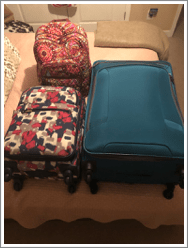
For starters, I would suggest bringing a large suitcase (mine was about 28”), a regular-sized carry-on suitcase, and a backpack. In most cases, you’ll be able to check your largest bag and then you’ll just have your smaller, carry-on suitcase and backpack to lug through the airport. Although that may seem like a lot, you have to imagine that you’ll likely be needing enough to last you for at least three months. I ended up packing most of my necessities into one suitcase and trying my hardest to keep a lot of space open in the other. I’m going to be completely honest here, it’s TOUGH, but you’ll be thankful when you go to pack for home. I also mention bringing a backpack; this is important so that you not only have it for your classes (as I assume most of you will be taking courses of some sort while you’re abroad), but it’s also nice to have for weekend trips. A lot of smaller (“cheaper”) airlines have very strict guidelines regarding carry-on luggage, so a backpack is usually a safe bet to bring. Also, weekend trips are pretty short, so you don’t really need a lot for just those few days.
Now I believe it’s time to start getting into what should be inside each of these suitcases to be completely prepared for your adventure. Regarding clothes, I advise you only take the bare minimum. Now that doesn’t mean bring one or two of everything, but keep in mind how much you may or may not like to shop and let that help to influence your packing. For me, I absolutely love to shop, so I knew I had to be wise in packing less so I could save room for everything I planned on buying. Whether you’re an avid shopper or not, it’s important to remember that you can rewear outfits or even mix and match pieces. This goes to say, try and stick with more neutral or similar styles of clothes, this way it’s easier to rewear pieces without feeling like you’re wearing the same outfit all the time. Another important thing to note is, don’t feel like you need to bring fancy outfits. I was told I needed some dresses and business casual outfits, so I packed a couple, only to have them sit in my closet for majority of the trip. If you’re not exactly sure if you’ll need a specific piece of clothing for your trip (i.e. dress clothes, or even swimsuits), it’s best to avoid packing them. There are plenty of places overseas that sell inexpensive, but nice clothes and such (check out Primark for a stylish, inexpensive, and AMAZING European option).

Even before diving into your closet and tossing it all into your suitcases, do some research on the fashion style of the country you’re going to be living in. Check out what current trends are in that area and see if anything you already own falls with that style. It was important to me that I did not stand out as a tourist, so I made sure to pack according to what the current fashion sense was in my host city, London. Now I’m not saying go out and buy a whole new wardrobe just to match your country’s fashion sense, but be aware that you’re going to fit into their norm more if you dress relatively close to the locals. I will also add that if you’re studying abroad in Europe and interested in following the locals’ style, avoid athleisure-type outfits. As comfortable and cute as they may be, Europeans tend to follow the casual, chic fashion sense. This goes to say, though, don’t just buy clothes that’ll match your host country’s style if you’re not going to be comfortable or are never going to wear them when you’re back home.
This is not to say you need to change your style completely before studying abroad. If you’re happy with your fashion sense, go forth with your stylish ways! You’ll fit in with the culture as long as you remain confident in who you are!
Aside from clothes, shoes are another important aspect of packing. I know from my experience, I wanted to pack as many shoes as I could to make sure I had a pair to match every type of outfit and occasion. I must say you will not need that many shoes. After countless nights of going through all my shoes, I managed to narrow down my search to about three pairs: a casual pair of black Vans for everyday wear, sandals for warmer climates and nicer occasions, and lightweight hiking boots for colder, wet climates. For boots, I found that Blundstone’s were comfortable, cute, and waterproof, so they were perfect for snowy tours of Prague or everyday strolls down Carnaby Street. Don’t feel like you only need to bring three pairs of shoes, but also remember to limit yourself because shoes do ultimately take up a lot of weight and space in your suitcase. Remember that you’re going to need to get what you pack now and what you buy there all back into these suitcases at the end of your trip, so try and stay minimalistic.
Along with minimalistic packing, avoid packing full-size shampoos and other toiletries unless you absolutely need them or know that you wont find them in your study abroad country. I researched what drugstores and grocery stores were nearby in London and went through their websites to see if they sold the types of products I use (or, at least, some similar), so I was able to just bring a few small travel-sized bottles to get me over there for a couple days. This ended up saving lots of space as well, because I didn’t have to worry about packing a semester’s worth of toiletries.
Now as we reach the end of this packing for study abroad discussion, it’s important to switch to an international phone plan as well. Understandably, the pre-trip focus is typically geared towards what and how to pack, but having the right phone plan is something equally as important to prepare for before departure. T-Mobile was suggested to our group as one of the better international phone plans. I will admit, it was pretty convenient having unlimited calls and texts overseas through T-Mobile, but it goes without saying, research what international plans your current phone carrier has and compare them to other carriers. I made the switch from AT&T to T-Mobile before going abroad, and it ultimately saved me money in the end. But also, if you’re looking for a completely free way to keep in touch with friends and family back home, WhatsApp is a great app for international communication. I was able to text, call, and video chat with my family back home all through WhatsApp*.
Needless to say, a lot of unexpected research goes into the packing and pre-trip process of studying abroad. I hope my mentions of different ideas and routes to packing put you at better ease for this experience. I will say that for all that goes into preparing, it is worth it in the end!

*Disclaimer: This post is not sponsored by any of the stores, brands, apps, or providers mentioned. These are strictly things I found useful from my time studying abroad.

 Navigating Nomad